Introduction
Getting into an accident is stressful enough, but when it happens in a rental car, the situation can feel even more overwhelming. Questions flood your mind: What do I do first? Who do I call? Will I be liable for damages? Am I covered by insurance?
In Singapore, road accidents are governed by specific laws and procedures that must be followed to ensure legal compliance and proper insurance claims. Whether it’s a minor fender bender or a more serious collision, knowing the correct steps to take can make a significant difference in how smoothly the situation is resolved.
At first glance, the process might seem complicated, with multiple parties involved – the rental company, insurance providers, the police, and other drivers. However, understanding your responsibilities and rights can help you navigate the situation calmly and efficiently, minimizing stress and potential financial liability.
In this guide, we’ll walk you through exactly what to do if you’re involved in an accident while driving a rental car in Singapore. From the immediate actions at the scene to dealing with insurance claims and rental procedures, you’ll have a clear roadmap to follow. By the end, you’ll be well-prepared to handle any unexpected situation on the road with confidence.
Key Takeaways
- Stay calm and prioritize safety first. Move to a safe location if possible and check for injuries before addressing vehicle damage.
- Report to the police when required. Accidents involving injuries, hit-and-run, or foreign vehicles must be reported to the police immediately.
- Document everything thoroughly. Photos, witness statements, and detailed notes are crucial for insurance claims and protecting yourself from liability.
- Contact your rental company immediately. Most companies have 24/7 hotlines and specific procedures you must follow to maintain insurance coverage.
- Understand your insurance coverage. Knowing what’s covered and what excess you’re responsible for helps you manage expectations and costs.
- Follow Singapore’s legal requirements. Failure to comply with accident reporting procedures can result in fines, penalties, or voided insurance coverage.
Understanding Your Insurance Coverage
Before diving into the step-by-step process, it is essential to understand what insurance coverage comes with your rental car in Singapore. This knowledge helps you know what to expect in terms of liability and out-of-pocket expenses.
What’s Typically Included in Rental Car Insurance
All rental cars in Singapore must have basic third-party insurance as mandated by law. However, most reputable rental companies, including Asia Car Rental, provide comprehensive insurance coverage that goes beyond the legal minimum.
Comprehensive Insurance
This covers damage to the rental vehicle itself, not just third-party claims. It protects you from bearing the full cost of repairs if you are involved in an accident, regardless of fault. Comprehensive coverage typically includes collision damage, theft protection and damage from natural events.
Third-Party Liability Coverage
This covers damage or injury you cause to other people, vehicles or property. In Singapore, the minimum third-party coverage is $600,000 for death or bodily injury and unlimited coverage for property damage. This ensures that if you are at fault in an accident, the insurance will cover claims from the other party.
Personal Accident Insurance
Some rental packages include personal accident coverage for the driver and passengers. This provides compensation for medical expenses, disability, or death resulting from an accident, regardless of fault.
Understanding Insurance Excess and Deductibles
Even with comprehensive insurance, you will typically be responsible for an excess or deductible amount in the event of an accident. This is the portion you must pay out-of-pocket before insurance coverage kicks in.
Standard Excess Amounts
In Singapore, rental car insurance excess usually ranges from $1,000 to $3,000, depending on the vehicle type and rental agreement with the rental company. Luxury or high-value vehicles normally have higher excess amounts, sometimes reaching $5,000 or more.
Excess Reduction Options
Many rental companies offer excess reduction or waiver options for an additional daily fee. This reduces or eliminates your excess liability, providing greater peace of mind. For example, paying an extra $15 to $30 per day might reduce your excess from $3,000 to $500 or zero.
When You Are Not Covered
It is crucial to understand situations where insurance coverage may be voided or limited:
- Driving under the influence of alcohol or drugs
- Driving without a valid license
- Allowing an unauthorized driver to operate the vehicle
- Using the vehicle for illegal purposes
- Reckless or negligent driving
- Failing to report the accident promptly to the rental company
Understanding these coverage details helps you make informed decisions and know what to expect financially in the event of an accident.
Immediate Steps to Take at the Accident Scene
The moments immediately following an accident are critical. How you respond can affect your safety, legal standing, and insurance claims. Here’s exactly what you need to do, step by step.
Step 1: Ensure Safety and Check for Injuries
Stop Immediately
Never leave the scene of an accident, even if it seems minor. Leaving the scene is a serious offence in Singapore and can result in criminal charges, including fines, imprisonment, and license suspension.
Turn on Hazard Lights
Activate your hazard lights immediately to warn approaching traffic. This is especially important on busy roads or highways where visibility might be limited.
Move to Safety if Possible
If the vehicles are drivable and the accident is minor with no injuries, move them to the side of the road or a safe location to avoid obstructing traffic. However, if there are injuries or the vehicles cannot be moved safely, leave them in place and set up warning triangles if available.
Check for Injuries
Check yourself, your passenger, and occupants of other vehicles for injuries. If anyone is injured, call 995 for an ambulance immediately. Do not attempt to move injured persons unless there’s an immediate danger (such as fire or oncoming traffic).
Step 2: Call the Police When Required
In Singapore, certain accidents must be reported to the police immediately, while others can be handled through the General Insurance Association (GIA) e-Accident Report system.
When You Must Call the Police (999)
You are legally required to call the police if the accident involves:
- Any injury or death
- Damage to government property (traffic lights, barriers, road signs)
- A foreign-registered vehicle
- A vehicle without valid insurance
- Hit-and-run situations
- Suspected drunk-driving or reckless driving
- Disputes about fault or circumstances
When Police Reporting is Not Required
If the accident involves only property damage to Singapore-registered vehicles with valid insurance, and all parties agree on the facts, you can handle it through the GIA e-Accident Report system within 24 hours.
What to Tell the Police
When calling 999, provide:
- Your exact location (street name, nearest landmark, or postal code)
- Whether there are injuries
- Number of vehicles involved
- Whether the road is blocked
- Any other relevant safety concerns
Wait for the police to arrive and follow their instructions. Do not leave the scene until authorized to do so by the police.
Step 3: Exchange Information with Other Parties
While waiting for the police (if called) or if police attendance is not required, exchange information with all other parties involved.
Essential Information to Collect
From each driver involved, obtain:
- Full name and contact number
- NRIC or passport number
- Vehicle registration number
- Insurance company name and policy number
- Driver’s license number
- Contact details of the vehicle owner (if different from the driver)
Do Not Admit Fault
While being polite and cooperative, avoid admitting fault or apologizing in ways that could be interpreted as accepting liability. Stick to factual statements about what happened. Phrases like “I’m sorry” can be misconstrued as admission of guilt in legal proceedings.
Get Witness Information
If there are witnesses, collect their names and contact numbers. Witness statements can be valuable for insurance claims and determining fault, especially if there are disputes.
Step 4: Document the Accident Scene Thoroughly
Comprehensive documentation is crucial for insurance claims and protecting yourself from false claims.
Take Photos and Videos
Use your smartphone to capture:
- Overall scene showing all vehicles’ positions
- Damage to all vehicles from multiple angles
- License plates of all vehicles involved
- Road conditions, traffic signs, and road markings
- Skid marks, debris, or other relevant evidence
- Weather conditions (if relevant)
- Nearby CCTV cameras or dash cam footage locations
Make Detailed Notes
Write down or record:
- Date, time, and exact location of the accident
- Weather and road conditions
- Traffic situation (light, moderate, heavy)
- Direction each vehicle was travelling
- Approximate speed of vehicles
- Sequence of events leading to the accident
- Any relevant road signs or traffic signals
Preserve Evidence
If you have a dash cam (highly recommended for rental cars), ensure the footage is saved and not overwritten. Many modern dash cams have an emergency lock feature that preserves critical footage.
Step 5: Contact Your Rental Company Immediately
This is one of the most critical steps when driving a rental car. Failure to notify the rental company promptly can void your insurance coverage.
Use the 24/7 Emergency Hotline
Most rental companies, including Asia Car Rental, provide a 24/7 emergency hotline specifically for accidents and breakdowns. This number should be in your rental agreement and saved in your phone.
What to Report
When calling, provide:
- Your vehicle number
- Your location
- Nature and extent of the accident
- Whether there are injuries
- Whether the vehicle is drivable
- Whether police were called
- Contact information for other parties involved
Follow Company Instructions
The rental company will guide you through their specific procedures, which may include:
- Whether to file a police report or GIA report
- Arranging for vehicle towing if needed
- Providing a replacement vehicle
- Completing accident report forms
- Scheduling vehicle inspection
Time-Sensitive Requirements
Many rental agreements require notification within a specific timeframe, typically within 24 hours. Failing to meet this requirement could result in:
- Voided insurance coverage
- Full liability for damages
- Additional penalties or fees
- Difficulty in processing claims
Post-Accident Procedures and Documentation
Once you have handled the immediate situation at the accident scene, several important steps follow to ensure proper claims processing and legal compliance.
Filing the Required Reports
Depending on the nature of your accident, you will need to file either a police report or a GIA e-Accident Report.
Police Accident Report
If the police attended the scene, they would have documented the accident. You should:
- Obtain the police report reference number
- Visit the relevant police station within 24 hours if requested to provide additional statements
- Collect a copy of the police report for your records
- Provide the report number to your rental company
GIA e-Accident Report
For accidents not requiring police attendance, both parties must file an accident report within 24 hours. The GIA Motor Claims Framework portal is an online system that has streamlined the claims process for property-damage-only accidents.
To file:
- Visit the GIA Singapore website
- Access the Motor Claims Framework portal
- Complete the accident report with all required details
- Upload photos and supporting documents
- Submit the report and receive a reference number
Both parties involved must file separate reports. If the other party refuses or fails to file, you should still submit your report and note this in your documentation.
Providing Documentation to Your Rental Company
Submit all required documents to your rental company, typically including:
- Completed accident report form
- Copy or police report or GIA report reference number
- Photos and videos of the accident scene
- Contact information for all parties involved
- Witness statements if available
- Any correspondence with the other party
Vehicle Inspection and Damage Assessment
After an accident, the rental company will need to assess the damage to determine repair costs and insurance claims.
Immediate Inspection
If the vehicle is drivable, you may be asked to return it to the rental company’s office for inspection. If not, they will arrange for a tow truck and inspect it at their facility or an approved workshop.
Assessment Process
A qualified assessor will:
- Document all damage related to the accident
- Determine whether damage was pre-existing or accident-related
- Estimate repair costs
- Assess whether the vehicle is a total loss
- Prepare a detailed report for insurance purposes
Your Presence During Inspection
It is advisable to be present during the inspection if possible. This allows you to:
- Point out any pre-existing damage not related to the accident
- Ensure the assessment is fair and accurate
- Ask questions about the process
- Get immediate information about estimated costs
Understanding Your Financial Liability
Once the damage is assessed, you will receive information about your financial responsibility.
Insurance Excess Payment
You will typically need to pay the insurance excess amount (usually $1,000 to $3,000) either immediately or as deducted from your deposit. This payment is required regardless of fault, though you may be able to recover it if you are found not at fault.
Additional Charges
Depending on your rental agreement and circumstances, you may face additional charges:
- Loss of use fees: Compensation to the rental company for the period the vehicle cannot be rented to others
- Administrative fees: Processing costs for handling the accident claim
- Towing and recovery costs: If not covered by your insurance package
- Traffic fines or summons: Any violations detected or issued related to the accident
Recovering Costs if Not at Fault
If you are not at fault and have proper documentation:
- Your insurance excess may be recovered from the at-fault company’s insurance
- The rental company’s insurance will pursue the claim against the other party
- This process can take weeks or months, requiring patience
- Keep all documentation and correspondence for your records
Dealing with Insurance Claims
Understanding how insurance claims work helps you navigate the process smoothly and ensures you receive proper coverage.
How the Claims Process Works
The claims process involves several parties: you (the renter), the rental company, their insurance provider, and potentially the other party’s insurance.
Initial Claim Filling
The rental company will file the insurance claim on behalf of the damaged vehicle. You will need to provide:
- Your account of the accident
- All documentation and evidence collected
- Cooperation with insurance investigators if required
- Additional statements or clarifications as needed
Insurance Investigation
The insurance company may conduct their own investigation, which can include:
- Reviewing police reports and GIA reports
- Examining photos and physical evidence
- Interviewing involved parties and witnesses
- Assessing the damage and repair costs
- Determining fault and liability
Claim Assessment and Decision
Based on the investigation, the insurance company will:
- Determine the percentage of fault for each party
- Approve or deny coverage
- Calculate the claim amount
- Process payment to the rental company for repairs
- Settle any third-party claims if they were at fault
Timeline Expectations
Insurance claims typically take:
- Simple, clear-cut cases: 2 to 4 weeks
- Cases with disputed fault: 4 to 8 weeks
- Complex cases with injuries or legal disputes: Several months
Stay in regular contact with your rental company for updates on the claim status.
What to Do if Your Claim is Disputed
Sometimes, insurance companies or other parties may dispute your version of events or deny coverage.
Common Reasons for Disputes
- Conflicting accounts from involved parties
- Lack of sufficient evidence or documentation
- Questions about who had right of way
- Uncertainty about which driver was at fault
- Alleged policy violations (such as unauthorized drivers)
Steps to Take
If your claim is disputed:
- Review all your documentation and evidence carefully
- Provide any additional information or clarification requested
- Consider obtaining witness statements if available
- Cooperate fully with investigators
- Seek legal advice if the dispute involves significant amounts
Escalation Options
If you believe the claim is being unfairly handled:
- Request a review from senior claims managers
- File a complaint with the Financial Industry Disputes Resolution Centre (FIDReC)
- Seek independent legal counsel
- Consider mediation services for dispute resolution
Third Party Claims Against You
If you were at fault, the other party may file a claim against you (or more specifically, against the rental car’s insurance).
How Third-Party Claims Work
- The other party files a claim with their insurance company
- Their insurer assesses the claim and may pursue your rental car’s insurance for compensation
- Your rental company’s insurance handles the defence and settlement
- You typically won’t be directly involved unless there are complications
Your Responsibility
Even though the insurance handles third-party claims, you should:
- Cooperate with any investigations
- Provide accurate and complete information
- Be available for statements if needed
- Not communicated directly with the other party about settlement
Potential Personal Liability
In rare cases, you might face personal liability if:
- Damages exceed insurance coverage limits (unlikely with comprehensive coverage)
- Insurance coverage is voided due to policy violations
- Criminal charges are filed related to the accident
- The other party pursues legal action beyond insurance settlement
Common Mistakes to Avoid
Many drivers make errors during and after accidents that can complicate claims, increase liability, or violate rental agreements. Here are the most common mistakes and how to avoid them.
Leaving the Accident Scene
Why This is Serious
Leaving the scene of an accident is a criminal offence in Singapore, punishable by:
- Fines up to $3,000 or imprisonment up to 12 months for property damage cases
- Fines up to $10,000 or imprisonment up to 3 years for cases involving injury
- Disqualification from driving
- Criminal record
The Only Exception
You may leave temporarily only to seek immediate medical attention for serious injuries, but you must report to the police as soon as possible afterward.
Admitting Fault at the Scene
Why You Should Be Careful
Even if you believe you were at fault, admitting it at the scene can:
- Be used against you in insurance claims
- Prevent fair assessment of actual fault distribution
- Complicate situations where fault is actually shared
- Impact your ability to recover costs
What to Say Instead
Stick to factual statements: “I was driving from X direction and the collision occurred at Y location.” Let investigators determine fault based on evidence rather than admissions.
Failing to Document Properly
Common Documentation Errors
- Taking too few photos or from limited angles
- Not capturing the overall scene context
- Forgetting to photograph the other party’s details
- Not recording witness information
- Failing to note road and weather conditions
The Impact
Poor documentation can:
- Weaken your insurance claim
- Make it difficult to prove your version of events
- Leave you vulnerable to false claims
- Result in disputed liability
Best Practice
Over-document rather than under-document. You can always discard excess information, but you cannot recreate missing evidence later.
Delaying Notification to the Rental Company
Why Timing Matters
Most rental agreements require notification within 24 hours. Delays can:
- Void your insurance coverage
- Result in additional penalties
- Complicate the claims process
- Make the rental company question your account
Even for Minor Accidents
Even if the damage seems minimal, report it immediately. Small debts or scratches might hide more significant structural damage, and unreported damage discovered later could be attributed to you regardless or when it actually occurred.
Agreeing to Private Settlements
Why This is Risky
The other party might suggest settling privately without involving insurance or the rental company. This is extremely risky because:
- You are violating your rental agreement by not reporting
- The other party might later claim higher damages
- You lose insurance protection
- Hidden damage might appear later
- You could face legal issues if the agreement is not properly documented
Always Report Officially
Even if you and the other party reach an agreement, you must still report the accident to your rental company so that the rental company can advise you professionally.
Not Understanding Your Rental Agreement
Key Clauses to Know
Many renters do not fully understand their rental agreement, leading to surprises after an accident. Important clauses include:
- Insurance excess amounts and when they apply
- Reporting requirements and timeframes
- Restrictions on authorized drivers
- Geographic restrictions (e.g. Malaysia travel)
- What voids insurance coverage
- Additional fees for accidents (admin fees, loss of use)
Read Before You Drive
Take time to read and understand your rental agreement before accepting the vehicle. Ask questions about anything unclear, especially regarding accident procedures and insurance coverage.
Preventing Rental Car Accidents
While this guide focuses on what to do after an accident, prevention is always better than cure. Here are practical tips to minimize your risk of accidents in a rental car.
Familiarize Yourself with the Vehicle
Before Driving Off
Take a few minutes to:
- Adjust mirrors, seats, and steering wheel for comfort
- Locate and test all essential controls (lights, wipers, indicators)
- Understand the vehicle’s size and blind spots
- Test the brakes in a safe area to understand their responsiveness
- Check that the dash cam (if installed) is functioning
- Program your destination into the GPS before moving
Different Vehicle Characteristics
Rental cars may handle differently than your personal vehicle:
- Braking distances might vary
- Acceleration response could be different
- Steering sensitivity may feel unfamiliar
- Vehicle size affects turning radius and parking
Give yourself time to adjust to these differences, especially in the first few hours of driving.
Drive Defensively
Key Defensive Driving Practices
- Maintain safe following distances (at least 2 – 3 seconds behind the vehicle ahead)
- Anticipate other drivers’ actions and have an escape route
- Avoid aggressive driving, speeding, or sudden lane changes
- Be extra cautious at intersections and during lane merges
- Use indicators early and clearly communicate your intentions
- Stay alert and avoid distractions (phone use, eating, adjusting controls)
Singapore-Specific Considerations
- Watch for motorcycles and bicycles, especially in blind spots
- Be aware of heavy pedestrian traffic in urban areas
- Respect bus lanes and avoid illegal bus lane usage
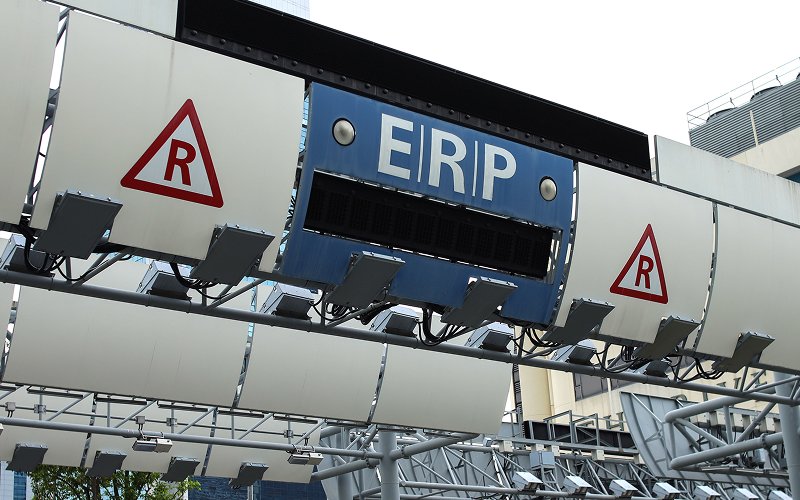
- Monitor ERP gantries to avoid violations
- Be cautious during heavy rain, which can cause hydroplaning
Avoid Common Accident Scenarios
Rear-End Collisions
These are the most common type of accident in Singapore. Prevent them by:
- Maintaining adequate following distance
- Staying alert to brake lights ahead
- Avoiding sudden braking when safe alternatives exist
- Checking your mirrors frequently for following vehicles
Intersection Accidents
Intersections are high-risk areas. Stay safe by:
- Slowing down when approaching intersections even with green lights
- Checking for red-light runners before proceeding
- Ensuring the intersection is clear before turning
- Being especially cautious when visibility is limited
Parking Lot Incidents
Many minor accidents occur in parking lots. Be careful by:
- Driving slowly and watching for pedestrians
- Checking blind spots thoroughly before reversing
- Using parking sensors or cameras if available
- Being patient when navigating tight spaces
- Parking in well-lit, spacious areas when possible
Lane Change Collisions
Prevent sideswipe accidents by:
- Checking mirrors and blind spots thoroughly
- Signaling well in advance
- Ensuring there is adequate space before changing lanes
- Making smooth, gradual lane changes rather than sudden movements
Use Available Safety Features
Modern rental cars often come with advanced safety features. Make use of:
- Parking sensors and reverse cameras for safer parking
- Blind spot monitoring systems to detect adjacent vehicles
- Lane departure warnings to prevent unintentional drifting
- Automatic emergency braking (if available) as a backup safety net
- Dash cams for evidence in case of accidents
Understanding and utilizing these features can significantly reduce your accident risk.
Frequently Asked Questions About Rental Car Accidents in Singapore
When facing an accident in a rental car, drivers often have similar concerns and questions. Below are the most common queries we receive, with detailed answers to guide you through the process.
1. Will I be charged if the accident was not my fault?
You will typically still need to pay the insurance excess initially, even if you are not at fault. However, if investigations confirm you were not at fault, the rental company’s insurance will pursue recovery from the at-fault party’s insurance. Once recovered, your excess payment should be refunded to you. This process can take several weeks to months depending on the complexity of the claim. Keep all documentation and maintain communication with the rental company regarding the status of excess recovery.
2. What if the other driver does not have insurance?
If the other driver is uninsured, your rental car’s comprehensive insurance will still cover the damage to your rental vehicle, subject to your excess payment. The rental company’s insurance will then pursue the uninsured driver directly for compensation. However, this can be a lengthy process. This situation highlights why reporting uninsured drivers to the police is important – driving without insurance is illegal in Singapore and subject to serious penalties including fines up to $1,000, imprisonment up to 3 months, and driving disqualification.
3. Can I continue using the rental car after a minor accident?
This depends on the extent of the damage and your rental company’s policy. If the vehicle is safe to drive and the damage is purely cosmetic (minor scratches or dents), some companies may allow you to continue using it until the end of your rental period. However, you must still report the accident immediately and get authorization from the rental company before continuing to drive. If there is any mechanical damage, safety concerns, or if the vehicle fails inspection, you will need to return it and may be provided with a replacement vehicle.
4. Do I need a lawyer for a rental car accident?
For most straightforward accidents involving only property damage, you will not need a lawyer. The rental company’s insurance will handle the claims process. However, you should consider legal counsel if: the accident involves serious injuries or fatalities; there are criminal charges (such as dangerous or drink-driving); there are significant disputes about fault or liability; you are facing claims that exceed insurance coverage; or the rental company is claiming you violated terms that void insurance. In these cases, consulting with a lawyer experienced in Singapore traffic law can protect your interests.
5. What happens if I was driving under the influence?
Driving under the influence of alcohol or drugs is a serious offence in Singapore and will void your rental car insurance coverage. If you are involved in an accident while impaired, you will be personally liable for all damages to the rental vehicle, third-party claims, and any other costs. Additionally, you will face criminal charges including fines up to $10,000 or imprisonment up to 12 months for first offences, mandatory driving disqualification for at least 2 years, and a criminal record. The rental company may also pursue you for the full cost of the vehicle it it is a total loss, plus loss of use and other damages.
6. Can I claim for personal injuries from the accident?
If you have purchased personal accident insurance as part of your rental package, you can claim for medical expenses and compensation related to injuries sustained in the accident. If not, you may still be covered under your personal health insurance or can claim against the at-fault driver’s insurance if they caused the accident. For work-related injuries, Workers’ Compensation may apply. Keep all medical receipts and documentation to support your claim. Seek medical attention immediately after the accident, even if injuries seem minor, as some symptoms may appear later.
7. How long does the insurance claim process take?
The time line varies depending on the complexity of the case. Simple, clear-cut accidents with no disputes typically resolve within 2 to 4 weeks. Cases with disputed fault or requiring detailed investigation may take 4 to 8 weeks. Complex cases involving injuries, legal disputes, or multiple parties can take several months. Throughout this period, the rental company will keep you updated on the claim status. Your insurance excess is typically held until the claim is fully resolved, though you may receive partial refunds earlier if your non-fault status becomes clear.
8. Will this accident affect my personal car insurance premiums?
Generally, accidents in rental cars do not directly affect your personal vehicle insurance premiums, as they are separate policies. However, if you make a claim on your personal insurance (such as personal accident coverage) related to the rental car accident, this could potentially impact your No Claims Discount (NCD) on your personal policy. Additionally, if you have multiple at-fault accidents across different vehicles within a short period, insurers may view you as a higher-risk driver when renewing your personal policy. It is advisable to clarify this with your personal insurance provider.
Conclusion
Being involved in an accident while driving a rental car can be a daunting experience, but knowing the proper procedures makes all the difference. From ensuring safety at the scene to documenting everything thoroughly, reporting to authorities, and working with your rental company’s insurance, each step is crucial for protecting yourself legally and financially.
The key is to remain calm, follow the proper procedures, and maintain clear communication with all parties involved – the rental company, insurance providers, and authorities. Understanding your insurance coverage, documenting everything comprehensively, and reporting promptly are the foundations of handling any rental car accident successfully.
Remember that most rental car accidents are resolved smoothly when proper procedures are followed. With comprehensive insurance coverage, professional support from your rental company, and adherence to Singapore’s legal requirements, you can navigate the situation with confidence and minimal stress.
At Asia Car Rental, we understand that accidents happen, and we are committed to supporting our customers through every step of the process. Our vehicles come with comprehensive insurance coverage, 24/7 emergency support, and a dedicated team ready to assist you whenever needed. We provide clear guidance, transparent processes, and professional handling of all accident-related matters to ensure your experience is as smooth as possible.
Ready to rent a car with peace of mind? Asia Car Rental offers a wide range of well-maintained vehicles with full insurance coverage and comprehensive support. Whether you need a car for business, leisure, or long-term use, our transparent policies and customer-focused service ensure you are protected on the road.
Contact us today to learn more about our rental options, insurance coverage, and how we support our customers in every situation.