
A rental car breakdown is a wrench in anyone’s plan. In our experience supporting drivers in Singapore, the first questions are usually practical: Is it safe to keep driving? Who should I call? Will someone come to help? What happens if I need another car?
We always tell drivers to deal with safety first, then let the rental company coordinate the next step. A rental car breakdown can be stressful, especially on an expressway or before an appointment. However, knowing what to do can prevent a manageable vehicle issue from becoming a much bigger disruption.
This guide explains how we advise drivers to respond and what warning signs should never be ignored.
Key Takeaways
- If a rental car breakdown happens while you are driving, move the vehicle to a safe stopping place where possible and switch on the hazard lights.
- Do not continue driving if the vehicle is losing power, overheating, producing smoke, leaking fluid, or becoming difficult to control.
- Contact the rental company before arranging your own repair, towing, or emergency vehicle recovery unless immediate emergency help is required.
- On a Singapore expressway, follow LTA’s breakdown procedures and do not attempt roadside repairs.
- Report warning lights, unusual sounds, smells, vibrations, or handling changes early.
- Whether you need a 1-week car rental or a longer arrangement, familiarise yourself with the vehicle and your rental provider’s breakdown procedure before setting off.
What Counts as a Rental Car Breakdown?
We generally use the term rental car breakdown for a mechanical, electrical, tyre, or vehicle-related fault that prevents a car from operating normally or safely.
Examples include:
- A flat battery or ignition fault
- Sudden loss of engine power or repeated stalling
- Engine overheating
- A flat tyre, blowout, or serious wheel damage
- Heavy steering or reduced braking performance
- Transmission problems
- Critical warning lights
- Smoke, steam, strong burning smells, or significant fluid leaks
- Electrical faults affecting essential lights or safety systems
From what we see, drivers sometimes hesitate to report an issue because the car has not completely stopped. If a rental car breakdown seems possible and you are unsure whether the vehicle is safe to continue driving, stop somewhere safe and contact the rental company.
What Is Usually Handled Differently?
Not every problem during a rental period is treated as a rental car breakdown. Accidents, cosmetic damage, lost keys, running out of fuel, parking incidents, and damage resulting from misuse may be handled under different procedures or rental terms.
If you are uncertain, tell the rental company exactly what happened rather than trying to categorise the issue yourself.
What We Tell Drivers to Do Immediately
The first few minutes of a rental car breakdown are usually the most important. Our advice is to focus on getting out of danger rather than diagnosing the vehicle.
Move Somewhere Safe If You Can
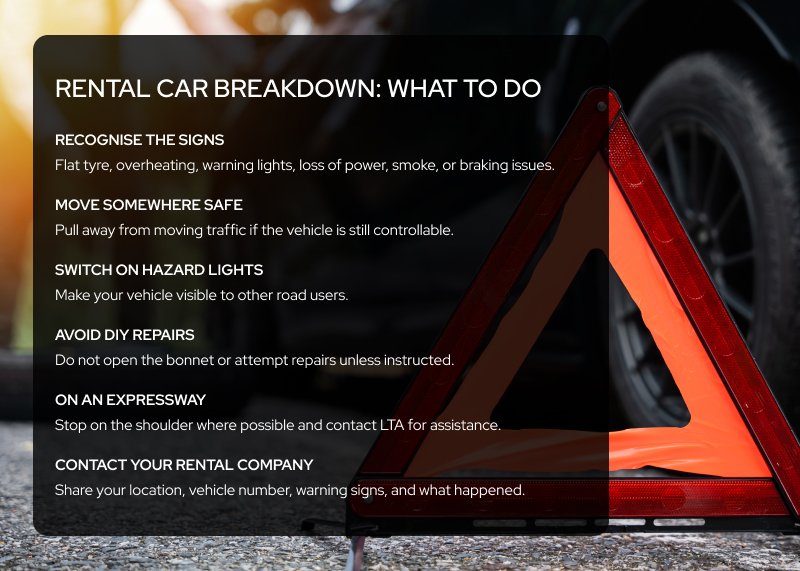
If the vehicle is still controllable, reduce speed smoothly, check the traffic around you, and move away from the active carriageway where it is safe to do so. This may mean a road shoulder, stopping bay, car park, petrol station, or another safe area.
If the problem affects steering, braking, or vehicle control, do not force the car farther than is safe.
Switch On the Hazard Lights
Switch them on as soon as you can safely do so.
Decide Whether It Is Safer to Stay In or Get Out
There is no single answer for every rental car breakdown because the safest place depends on where the vehicle stops.
If the car is close to moving traffic, do not step into a live lane. If it is unsafe to leave the vehicle, remain inside with your seatbelt fastened and call for assistance.
Do Not Try to Repair the Car Yourself
We discourage improvised repairs, particularly under the bonnet. Modern vehicles contain hot, pressurised, electrical, and moving components that can cause injury.
A rental car breakdown caused by overheating is a good example. Opening a hot coolant reservoir or radiator cap can release pressurised steam or coolant. Unless the rental provider or roadside professional gives you specific safe instructions, leave diagnosis and repair to them.
What If the Car Breaks Down on the Expressway?
An expressway rental car breakdown needs extra care because of higher traffic speeds and limited safe stopping space.
The Land Transport Authority advises drivers whose vehicles break down on an expressway to stop on the road shoulder where possible, switch on the hazard lights, and call LTA at 1800-2255-582. Drivers should provide their location and direction of travel, using nearby kilometre markers, lamppost numbers, or slip roads where available. LTA also advises drivers not to attempt repairs on the expressway. Its EMAS recovery crew can tow a stalled vehicle to the nearest designated car park.
We recommend following LTA’s instructions first if you are on an exposed expressway, then updating the rental company so they can coordinate further recovery or assessment.
When You Should Move Away From the Vehicle
Some symptoms make a rental car breakdown more urgent than a simple flat battery.
Move away to a safe location if you see flames or significant smoke, smell strong fuel vapours, or notice a major fuel leak. If there is a fire, injury, or immediate danger, contact the appropriate emergency service rather than waiting only for the rental provider.
Treat loud hissing from the engine bay, strong burning smells, or visible steam cautiously. Do not approach the source if doing so puts you near traffic, fire, or another obvious hazard.
Traffic Police guidance also advises motorists and passengers to keep clear of the carriageway and wait behind the vehicle impact guardrail while assistance is on the way. If it is safe to do so, place a breakdown warning triangle at least 20 metres behind the vehicle to alert approaching traffic.
Contact the Rental Company Once You Are Safe
After safety is under control, the next step in a rental car breakdown is to contact your rental provider. Many established car rental companies provide a 24-hour breakdown or emergency assistance hotline, so check your rental agreement, booking confirmation, or saved contact details for the relevant number. Calling the dedicated hotline can help you reach the right support team faster, especially if the problem happens after normal business hours.
When customers call us, the most useful information is usually:
- Your location
- The vehicle registration number
- What happened immediately before the issue
- Whether the car can still move
- Which dashboard warning lights are showing
- Whether you can see smoke, fluid, tyre damage, or another obvious problem
This is where roadside assistance in Singapore, coordinated through your rental provider, becomes important. Depending on the fault and location, support may involve troubleshooting, a technician, towing, or emergency vehicle recovery.
Why We Tell Drivers Not to Arrange Repairs First
During a rental car breakdown, it can be tempting to call the nearest workshop or tow company.
We recommend contacting the rental company first unless there is an immediate safety emergency. Repairs or towing may need to follow the provider’s approved process.
A quick call can prevent duplicated towing, unauthorised repairs, or avoidable disputes later.
What Happens After Roadside Assistance Arrives?
The response to a rental car breakdown depends on the cause.
Some issues can be dealt with where the vehicle has stopped. Others require the vehicle to be transported for inspection. If the car cannot be safely driven, recovery may be arranged, after which the rental company can assess whether repair or replacement is more practical.
Will You Get a Replacement Car?
A replacement vehicle service can help reduce disruption when the original car cannot return to the road quickly. However, whether a replacement is available will depend on the rental agreement, vehicle availability, the cause of the fault, and the circumstances.
A replacement is not automatically guaranteed; the provider first needs enough information to assess the situation.
If you rely on a car every day or are considering a long-term car rental, ask what support is available if the assigned vehicle develops a problem.
Are You Responsible for the Breakdown?
One concern we hear after a rental car breakdown is whether the driver will have to pay for the repair.
There is no single answer because responsibility depends on the cause and the rental agreement. An unexpected mechanical fault differs from damage caused by negligence, misuse, incorrect fuelling, or continuing to drive after a serious warning appears.
Report problems promptly and keep a record of what happened, when you stopped, and what the dashboard displayed.
Warning Signs We Tell Drivers Not to Ignore
A rental car breakdown can feel sudden, but many vehicle problems provide some warning first. We tell drivers to report changes such as:
- Unfamiliar dashboard warning lights
- Grinding, squealing, knocking, or metallic noises
- Strong burning or fuel smells
- Heavy steering-wheel vibration or pulling to one side
- Changes in braking feel
- Sluggish acceleration, repeated stalling, or sudden power loss
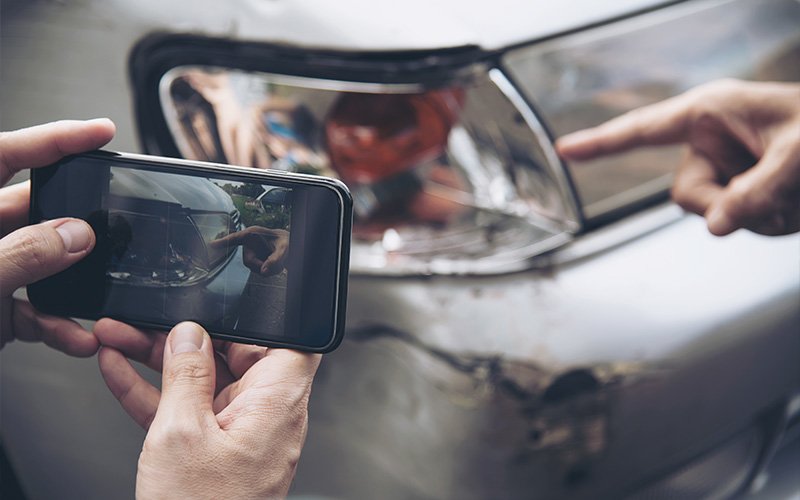
If you are unsure whether a warning is serious, take a photo where possible and contact the rental provider. Stopping early may prevent a developing issue from becoming a more difficult roadside situation.
Checks We Recommend Before Driving Away
We do not expect customers to perform a mechanical inspection. However, a few minutes of familiarisation can help you recognise a change later.
Before leaving, we recommend checking the tyres for obvious damage, the fuel level, exterior condition, and whether warning lights remain illuminated after starting. It is also useful to understand the parking brake, lights, wipers, and other essential controls.
These basic checks are useful whenever you collect a vehicle for rent, as they give you a clearer baseline for spotting anything unusual once you are on the road.
Habits That Can Reduce Avoidable Problems
No routine can eliminate every rental car breakdown. Mechanical and electrical faults can happen even when a vehicle has been maintained correctly.
However, drivers can reduce avoidable problems by keeping enough fuel for the journey, watching for warning lights, avoiding harsh impacts with kerbs or potholes, and reporting changes promptly.
Why the Rental Company Matters When Something Goes Wrong
In our experience, vehicle reliability is only one part of the rental experience. What happens when something goes wrong matters too. Regular servicing and fleet checks help reduce preventable faults, while clear support helps drivers know what to do next.
At Asia Car Rental, we focus on maintaining our fleet and giving customers a direct point of contact when they need support. If a rental car breakdown occurs, our priority is to understand the situation, help coordinate the appropriate response, and minimise unnecessary disruption where possible.
This can be especially important for companies that rely on vehicles for daily operations. For example, in a corporate car rental, breakdown support is not only about getting one driver moving again. A clear recovery and replacement process can also help reduce disruption to employee travel, client appointments, deliveries, and other business activities that depend on the vehicle being available.
Be Prepared Before You Need Help
The best time to understand the rental car breakdown process is before you are standing beside a stationary vehicle.
Keep the rental company’s contact details easy to access, and report unusual vehicle behaviour early rather than hoping it disappears.
At Asia Car Rental, we provide short- and long-term rental options backed by fleet maintenance and customer support throughout the rental period. If you need help choosing the right arrangement or want to understand the support available with your rental, contact us. We will help you find an option that fits how long you need the car and how you plan to use it.
Frequently Asked Questions
Who should I call first if my rental car breaks down?
Once you are in a safe position, contact the rental company so it can guide you and coordinate the appropriate assistance. If there is immediate danger, a fire, injury, or a hazardous expressway situation, contact the relevant emergency or LTA service first.
Should I keep driving if a warning light appears?
Not automatically. Some warning lights require urgent attention. If you are unsure, stop somewhere safe, take a photo of the dashboard, and ask the rental company before continuing.
Can I call my own tow truck?
We recommend speaking to the rental provider first. It may already have an approved roadside assistance or recovery process, and arranging towing independently can complicate where the vehicle is taken and how costs are handled.
Will I always receive a replacement vehicle?
No. A replacement depends on the rental agreement, availability, the nature of the fault, and whether the original vehicle can be returned to service quickly.
What should I do if the car breaks down on an expressway?
Move to the road shoulder where possible, switch on your hazard lights, and follow LTA’s expressway breakdown guidance. Do not attempt repairs on the expressway. After you address immediate road safety, notify the rental company.